
What the Research Actually Says About Toddler Screen Time, Beyond the Guilt Headlines
A clear, practical guide that explains why what toddlers watch and who watches with them matters more than an arbitrary minute count.
What the Research Actually Says About Toddler Screen Time, Beyond the Guilt Headlines
A Tuesday morning. The coffee is still hot enough to be useful. Your two-year-old climbs into your lap and points at the phone. A bright video is queued: two minutes of a familiar song, a flurry of color, a friendly character saying a handful of words. You press play, not because you want a screen to raise your child, but because you need a calm minute to finish your email, zip a lunchbox, or tie shoes.
You have seen the headlines. Screens rot brains. Screens cause language delays. You have read think pieces that demand exact minute limits and others that treat any screen as toxic. You want to do the right thing. You also want something practical you can actually do before the preschool newsletter arrives.
The truth in the research is quieter and more useful than the headlines. Studies do not point to a single, magic minute count that determines whether a toddler will thrive. What matters more is what a toddler watches, how interactive the material is, and whether an adult is nearby to turn a passive video into a learning moment. Below I’ll explain what the studies actually measured, who the findings affect, and exactly what to do this week to make screen time an ally instead of an anxiety trigger.
What does "screen time" actually mean in these studies?
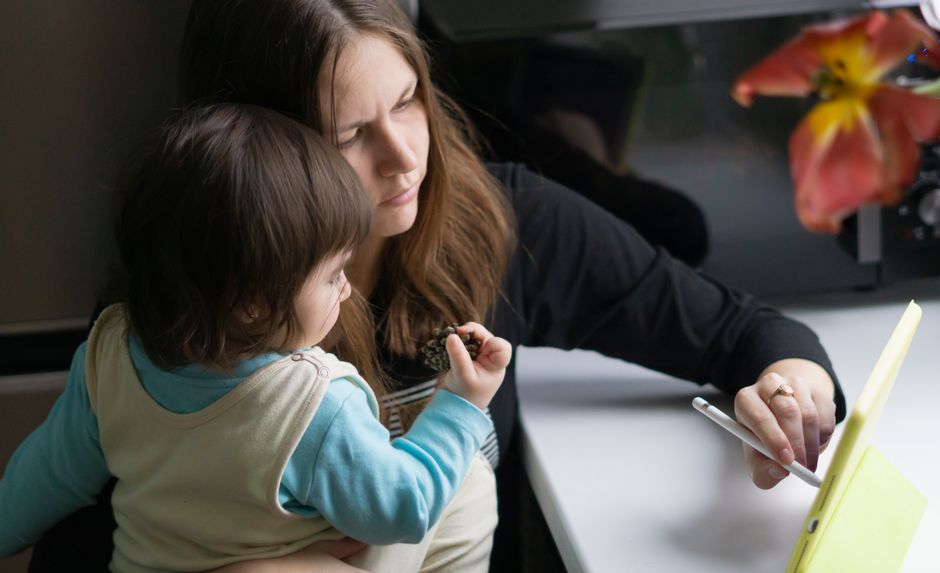 Photo by Marcial Comeron via Pexels
When researchers say "screen time" they are describing a wide range of activities. It can mean a child watching a passive cartoon on a tablet. It can mean playing an interactive app that responds to touch. It can mean a parent and toddler watching the same video and talking about it together. Most meta-analyses and reviews combine many of these different behaviors under one umbrella term (JAMA Pediatrics, 2020).
That matters. A 2020 systematic review and meta-analysis in JAMA Pediatrics looked at associations between screen use and child language skills. The paper found links between higher screen time and weaker language outcomes in young children, but the authors were careful: many studies could not fully separate quantity from content, parental involvement, or socioeconomic factors (JAMA Pediatrics, 2020). In plain terms, "more screens" often goes together with other things that affect language development, like less conversation with caregivers, but the studies do not prove that minutes alone cause delays.
Other research teases the parts apart. Experimental studies compare passive video viewing with contingent, interactive media and with joint viewing where an adult helps a toddler learn from a screen. Those experiments show a consistent result: toddlers learn better when content is designed for them and when an adult supports the viewing experience (PubMed Central, 2017; PubMed Central, 2021).
Is this a problem for my toddler?
 Photo by Jep Gambardella via Pexels
Short answer: maybe, but probably not for the reason you fear. The risk is not a single minute of screen time. It is repeated exposure to fast-paced, overstimulating content without adult interaction, and the replacement of real-world language and play with screens.
The JAMA review shows an association with language outcomes, but it also highlights confounding factors such as parental education and the home language environment. The Canadian Paediatric Society’s 2018 review similarly emphasizes content quality and the social context of use over minute counts alone (Paediatrics & Child Health, 2018). The Mayo Clinic’s guidance (2024) aligns with this: it recommends prioritizing high-quality content and co-viewing while also considering family routines and sleep.
Who is most at risk? Toddlers who routinely watch lots of fast-paced, adult-targeted programming alone and whose caregivers have little time for back-and-forth conversation are the group most linked to developmental concerns in the literature. The upside: if you choose appropriate content and use co-viewing to scaffold learning, the evidence suggests you can reduce those risks and even support language development.
How to learn your own baseline, what normal looks like for you specifically
Start with a nonjudgmental log. A practical starting structure is to keep a one-week screen diary this week. Note the time of day, duration, device, program or app name, and whether an adult was present. Also note two simple context items: what you were doing (cooking, on a call, resting) and how your child responded (calm, frustrated, mimicked words).
Try this short checklist for seven days:
- Record the first and last time of each screen session and the title of the content. Keep entries to one line each. (This is optional but useful.)
- Mark whether an adult watched with the child and whether the adult talked about what was on the screen.
- Jot down one sample word the child said during or immediately after the session.
At the end of the week, you will see patterns. Do most sessions happen during meals or before naps? Is the content mostly passive videos or interactive apps? How often are you there to co-view? This is information you can use. It is not a moral score.
Why this matters: experiments show that toddlers learn more from video when parents label objects, repeat words, and make the content relevant to the child’s world (PubMed Central, 2017). The 2021 study comparing learning from 2D media with and without parental support found that joint media engagement improves toddlers’ ability to transfer learning from a screen to real objects (PubMed Central, 2021). Your baseline tells you whether those supportive moments are already happening or whether they need to be added.
What other women's experience actually tells you, and where it stops being useful
Other parents bring hard-won shortcuts. You will hear recommendations about specific apps that "teach letters" or playlists that keep a toddler calm. Those recs are useful as experiments. But be skeptical when advice claims a particular app will cause measurable language gains on its own.
Why? Because the research shows apps and videos are not magic. An app that responds contingently to a child’s touch can be more engaging, but without adult scaffolding the learning gains in toddlers are modest (PubMed Central, 2021). Likewise, many popular videos are designed to be entertaining, not educational. They use fast cuts, bright patterns, and quick changes that attract attention but do not promote language mapping.
Practical test you can run this week: pick one short program you hear recommended and try a simple three-step experiment. Before playing, name two objects or actions the video will show. Watch with your child and label those objects out loud when they appear. After the video, offer the real object or a picture and ask your child to point to it. If they point or say the word, that is a small positive sign that the content, combined with your scaffolding, helped learning.
Other women’s experience is valuable for ideas and contingencies, but it stops being useful when it becomes a standard you must match. Your life, your routines, and your child’s temperament are the variables that matter.
How to have a better conversation with a clinician: what to track, what to ask
Bring the one-week log. Bring two short video clips: one of your child playing and one of them watching a typical program. Clinicians find concrete examples more helpful than abstract worries.
On the form, write down the three words you noticed your child saying a lot that week. Note whether your child uses two-word combinations, follows simple instructions, and points to objects when named. These are the conversation starters clinicians use. If you have concerns about language, the JAMA meta-analysis recommends contextualizing screen exposure alongside other factors such as reading frequency and caregiver speech (JAMA Pediatrics, 2020).
Questions to ask at the visit:
- "Based on this one-week log, do you see any areas I should monitor or test more formally?"
- "If my child is watching X minutes per day of Y content with me sometimes present, what would you advise to try next week?"
- "Are there community resources or early intervention screens you recommend if I keep seeing slow language progress?"
Bring the data. Ask for specific, time-bound next steps from the clinician, such as a follow-up in three months or a referral for a speech screening. The Mayo Clinic suggests discussing routine, sleep, and behavior in these visits as they often interact with screen habits (Mayo Clinic, 2024).
How do I pick good content for a 2-year-old?
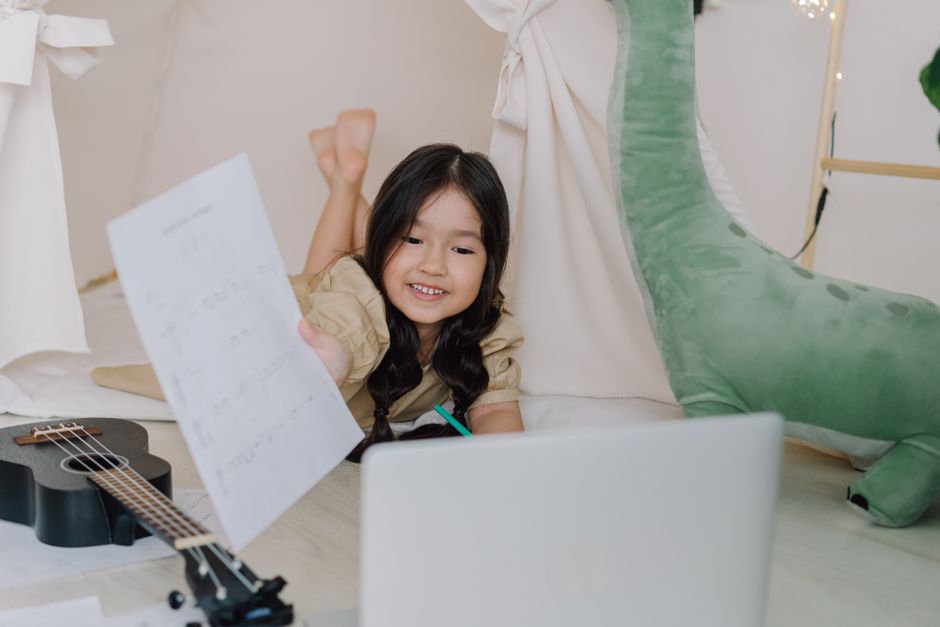 Photo by Mikhail Nilov via Pexels
Choose content that is simple, slow enough to follow, and labeled as age-appropriate. Look for programs that feature real people or real objects, predictable repetition, and language that is clear rather than rapid-fire. The Canadian Paediatric Society’s review advises prioritizing content that encourages interaction and avoids fast-paced entertainment that fragments attention (Paediatrics & Child Health, 2018).
Be wary of videos that demand attention with constant scene changes, flashing effects, or music that drowns out speech. Those features can keep a child watching but not learning. Interactive apps can be helpful, but only when they respond to a child in predictable ways and when an adult joins in to explain cause and effect.
A practical shortlist to try this week: pick one slow, real-person program for morning quiet time and one app you will only use for shared play. Rotate them for a week and note whether your child repeats words or plays with real-life objects related to the content afterward.
How should I co-view to boost learning and reduce harm?
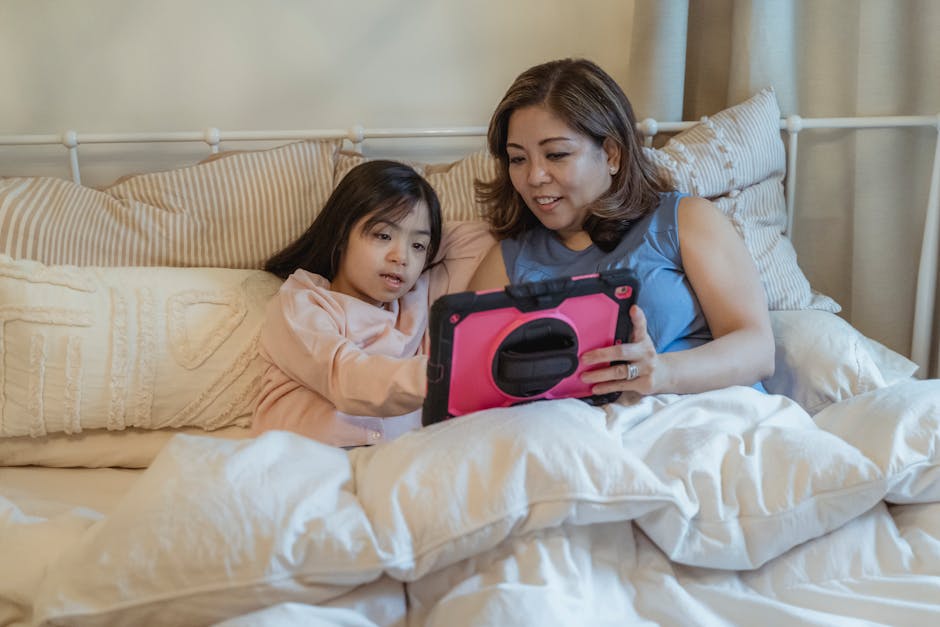 Photo by Nicola Barts via Pexels
Co-viewing is more than being in the room. It is talking about the screen: labeling, asking simple questions, and connecting what appears on the screen to your child’s immediate world.
Three specific co-view moves to use this week:
- Label three things before the video starts. Say, "We’re going to see a dog, a ball, and a red truck."
- During the video, narrate briefly. Say, "The dog is running. Look at the red truck." Keep sentences short and conversational.
- After the video, offer a quick transfer task. Hold up a toy dog or point to a picture and ask, "Where’s the dog? Can you show me the truck?"
These moves are grounded in experimental work showing that toddlers learn words better from video when adults provide contingent labeling and turn the content into a shared activity (PubMed Central, 2017). The 2021 trial comparing 2D media with parental support found that joint media engagement improves toddlers’ ability to transfer learning from screens to real-world objects (PubMed Central, 2021).
If you only have a minute, do a single label before or after the clip. One good sentence beats a silent hour.
What realistic routines and limits should you try?
 Photo by Annushka Ahuja via Pexels
Forget strict minute counts as the only rule. Instead, create routines that prioritize interaction and protect sleep and meals. The Canadian review (Paediatrics & Child Health, 2018) and Mayo Clinic guidance (Mayo Clinic, 2024) both stress the importance of screen-free family meals and device-free bedrooms for young children.
A practical routine to test this week:
- Screen-free meals. No devices at family tables. Use those periods for conversation, songs, or books.
- One short morning or afternoon session of curated content with co-viewing. Keep it 10 to 20 minutes if that fits your child’s attention span.
- No screens 60 minutes before bedtime to protect sleep routines. Replace screens with a calm shared activity like a story or soft music.
These are flexible starting points. If your child tolerates only five minutes of co-viewed content at first, start there. If naps change your day, adapt. The goal is to trade passive hours for moments where language and play continue.
What pediatric guidance recommends and your next practical step
Pediatric guidance from professional bodies and evidence reviews converges on a few clear principles: prioritize high-quality, age-appropriate content; co-view and scaffold learning; protect sleep and mealtimes from screens; and consider family context when setting limits (Paediatrics & Child Health, 2018; Mayo Clinic, 2024; JAMA Pediatrics, 2020).
Your next practical step before you close this tab: pick one evening this week and try a seven-minute co-view routine. Choose a short program you think is calm and age-appropriate. Before it starts, name two things you expect to see. Watch with your child for seven minutes. Afterward, point to a real object or picture and say the word again. See how they respond. That small experiment gives you real data and a gentle habit you can repeat and adjust.
The loud headlines want you to fix everything with a number. The research wants you to notice what your child is watching and how you are responding. Those are the things that actually change how screen time shapes learning.
Frequently asked questions
How much screen time is safe for a 2-year-old?
There is no single minute count the research treats as universally ‘‘safe’’ for every 2-year-old. Reviews and pediatric guidance emphasize content quality, parental interaction, and whether screens replace talking, play, or sleep. Many clinicians suggest limiting passive, unsupervised viewing and prioritizing co-viewed, age-appropriate material. If you’re tracking, focus first on when screens occur (meals, bedtime) and whether an adult is present rather than only on the total minutes (Paediatrics & Child Health, 2018; Mayo Clinic, 2024).
Does co-viewing really help toddlers learn words from videos?
Yes. Experimental studies show that toddlers learn more from video when an adult watches with them and provides labels, repetition, and simple commentary. A 2017 study found that co-viewing supports toddlers’ word learning from both contingent and non-contingent video, and a 2021 trial reported better transfer of learning from 2D media when parents actively supported the viewing (PubMed Central, 2017; PubMed Central, 2021).
Are interactive apps better than passive videos for 2-year-olds?
Interactive apps can be more engaging, but they are not automatically better. The advantage appears when apps respond contingently and when an adult helps connect the app to real-world objects and language. Without adult scaffolding, interactive features do not guarantee strong learning gains for toddlers. Look for predictable, simple interactions and plan to co-use the app (PubMed Central, 2021).
Will my toddler be behind if they watch a lot of videos now?
It depends. The JAMA Pediatrics meta-analysis found associations between higher screen exposure and weaker language outcomes, but many studies cannot separate screen quantity from other factors like reduced caregiver talk or socioeconomic variables. Occasional or well-scaffolded viewing is unlikely to be determinative. If you’re worried, track a week of screen habits and developmental milestones and discuss them with your pediatrician (JAMA Pediatrics, 2020).
How should I handle screens around naptime and bedtime?
Most guidance recommends avoiding screens in the hour before bedtime because screens can interfere with sleep routines and make it harder for children to unwind. Replace evening screen sessions with calming shared activities like reading or quiet play. The Canadian review and Mayo Clinic advise protecting sleep by keeping bedrooms screen-free and establishing consistent pre-sleep routines (Paediatrics & Child Health, 2018; Mayo Clinic, 2024).
Can a short educational video replace reading or talking time?
No. Videos do not replace the back-and-forth interaction that comes from reading and conversation. Joint reading and face-to-face conversation offer richer opportunities for turn-taking, which research ties to language growth. If you use video, pair it with adult commentary and real-object play to help transfer learning to the real world (PubMed Central, 2017).
What should I bring to a pediatric visit if I’m worried about screen effects?
Bring a one-week screen log showing typical programs, times, and whether you co-view. Bring two short videos: one of your child playing and one of them watching a program. Note three words your child uses frequently and whether they combine words or follow simple instructions. These concrete items help clinicians see the context and decide whether further screening is needed (Mayo Clinic, 2024; JAMA Pediatrics, 2020).


