
Why Postpartum Advice About Weight Misses the Recovery That Really Matters
A practical, nonjudgmental guide to pelvic floor and core healing, sleep survival, and identity shifts after childbirth
Why Postpartum Advice About Weight Misses the Recovery That Really Matters
She stands on the bathroom tile and waits for the scale to tell her a story. It is three weeks after delivery. There is a damp patch on her camisole from the one time she sneezed and felt the wetness, and she remembers laughing awkwardly with a nurse who said "your body knows how to recover." The scale’s numbers feel loud today, like someone else is running a tally of what she owes the world.
She has been told, in quiet and not-so-quiet ways, that the fastest route back is about how quickly the number drops. But the chest-tightness when she coughs, the low-level leaking when she jumps with the toddler, the effort it takes to sit up without a twinge, those are not measured on the scale. They are measured in whether she can carry groceries up stairs without changing her gait, whether she can laugh without fear, whether she can sleep for a two-hour block before a feeding. That tension is the shift: postpartum recovery advice that treats weight as the main target misses the functional recovery that determines long-term comfort and confidence.
This piece leaves the scale in the corner and talks about what will actually change your daily life: pelvic floor and core healing, surviving the relentless sleep debt of new motherhood, and the identity shifts that arrival of a child brings. You’ll get clear checkpoints for medical review, specific early-stage movement and pelvic cues you can practice safely, practical sleep strategies that partners and households can adopt, and short scripts to ask for concrete help. These are the things that matter more than the number on the scale.
What does postpartum recovery actually include beyond weight?
 Photo by Pavel Danilyuk via Pexels
Postpartum recovery is a bundle of overlapping processes: soft-tissue healing from childbirth, the nervous system recalibrating for the physical demands of new parenting, circadian disruption from night-waking, and a psychological reorientation to a new identity. That means three practical domains matter most for function: pelvic floor and core health, sleep and energy management, and identity and mood adaptation.
Pelvic floor and core healing refers to how the muscles and connective tissue that support the bladder, uterus, and abdomen recover after pregnancy and birth. This includes healing of a diastasis recti abdominis, the midline separation many women notice, and the return of coordinated pelvic floor control. Sleep recovery is not simply "more" sleep; it is about reducing chronic sleep debt, protecting circadian rhythms where possible, and structuring household sleep so restorative stretches occur. Identity and mood changes are the cognitive and emotional shifts that follow childbirth: loss of the old routine, grief for the pre-baby self, and the slow, sometimes uneven formation of a maternal identity.
Functional milestones are better targets than aesthetic timelines. Examples: being able to cough or sneeze without leaking, lifting your baby without lower back pain, sustaining at least one two-hour sleep window, returning to low-impact cardio without pelvic heaviness. These are measurable, specific, and relevant to your daily life.
Is focusing on weight harmful or just distracting?
It can be both. When the primary measure of success is body weight, other problems get missed. Pelvic floor dysfunction and untreated diastasis are often underreported because people assume they are "normal" after childbirth. That silence delays care. The National Institute for Health and Care Excellence, in guidance on postnatal care and pelvic floor dysfunction, highlights that women should be asked about urinary incontinence, pelvic pain, and pelvic organ prolapse symptoms at postnatal contacts because these issues are common and treatable (NICE, 2023; NICE, 2024). If conversations center on scales, those questions do not happen.
Weight-focused pressure also increases shame and avoidance. Shame makes it harder to ask for help and more likely someone will avoid movement or breathing strategies that actually support healing. The upside of shifting focus is clear: early identification of pelvic problems, better sleep planning, and emotional support lead to improved long-term function and quality of life.
What should I check medically in the first weeks after birth?
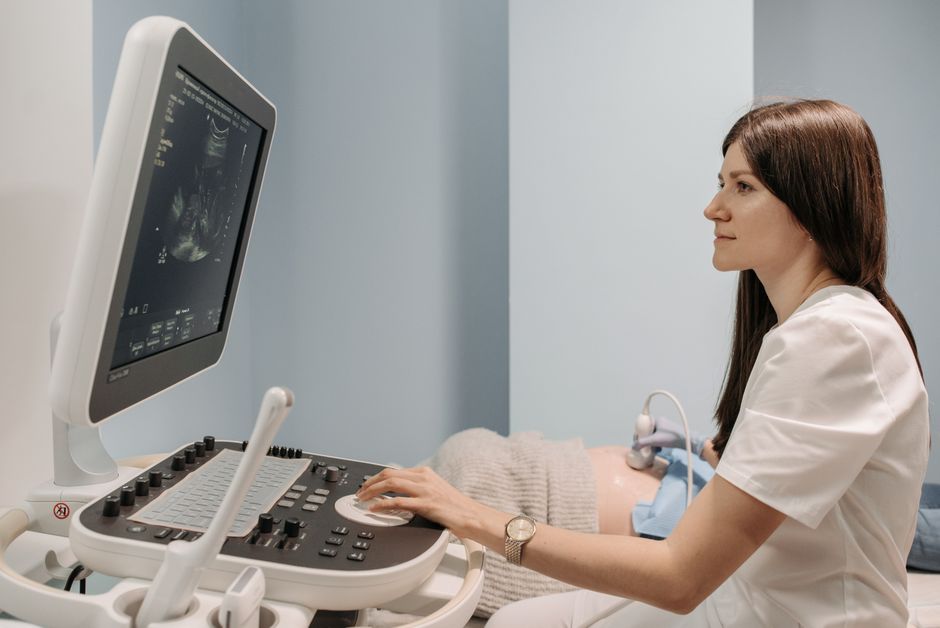 Photo by Pavel Danilyuk via Pexels
The six-week check is useful but limited. Guidance from NICE and the World Health Organization recommends earlier, repeated postnatal contacts and tailored checks because needs change rapidly in the first weeks (NICE, 2023; WHO, 2022). Here are concrete medical checkpoints and red flags:
- Contact within 72 hours to two weeks for breastfeeding and mood support. Lactation consultants reduce feeding problems when seen early (WHO guidance supports early, responsive care).
- Bring up urinary leakage, new pelvic pain, or feeling of heaviness at any point. If bleeding is heavy (soaking a pad within an hour), seek urgent review.
- If you cannot pass urine or have severe constipation causing pain, seek immediate care.
- If you feel crushing low mood, thoughts of harming yourself or your baby, or inability to function, seek urgent mental-health support.
Referral to a pelvic health physiotherapist is reasonable if you have any persistent leakage, a bulge or key concern about prolapse, or a separation you can feel in the midline with persistent weakness. NICE guidance on pelvic floor dysfunction recommends conservative management first-line and referral when symptoms persist (NICE, 2024).
How do I learn my own baseline after childbirth?
Learning your baseline is the first content-pillar action. It means recording three simple, repeatable data points for the first six weeks so you have concrete information for yourself and for clinicians.
Do this this week. For three consecutive weeks, note:
- Day 1: The first day of bleeding after birth for your postnatal record.
- One functional symptom score: choose one daily task (coughing, lifting a laundry basket, walking 20 minutes). Rate it 0 to 5 where 0 is no difficulty and 5 is impossible.
- One sleep window: note the longest continuous sleep block you had in each 24-hour period.
After three weeks you will see patterns. If coughing or laughing causes leaking at a 3 or higher consistently, that is information to take to a clinician. If you never have more than 45 minutes of continuous sleep, that is actionable too. These are not diagnostics. They are the baseline that makes clinical conversations specific and useful.
What can other women's experiences tell me, and where do they stop being useful?
There is a lot of communal wisdom in shared stories. What helps: learning practical hacks, normalizing postpartum grief, and discovering that other people found a pelvic floor PT or a sleep coach who worked for them. What does not help is treating anecdotes as a plan. One neighbor’s rapid weight loss does not predict your recovery. Another person’s return-to-run timeline does not mean you should follow the same path.
Use other women's experience as hypotheses, not prescriptions. Test small steps against your baseline. If a friend swears by a certain yoga class, try one session and measure whether your symptom score improves or worsens. The British Journal of Sports Medicine meta-analysis on postpartum exercise shows general benefit for pelvic health and diastasis outcomes from appropriately timed, progressive exercise, but the effects depend on the type and timing of exercise, so individualization matters (BJSM review, 2024). In short: listen. Then measure.
How do I have a better conversation with a clinician?
This is the third content pillar: what to track and what to ask.
What to track before your appointment:
- Your three-week baseline notes (task score, bleeding start day, sleep window).
- One photo-style note of your abdominal midline when you perform a gentle curl-up if you see a bulge; this helps when discussing diastasis but do not self-diagnose.
- A clear list: "I leak when I cough (3/5), longest sleep 45 minutes, I feel a midline gap when I sit up."
What to ask, in plain language:
- "Can you assess my pelvic floor and show me safe movements to do now?"
- "Is my diastasis something a pelvic health physio should treat, or can I start progressive exercise?"
- "I am only getting X minutes of continuous sleep. What strategies can we try now?"
If you are referred, a pelvic health physiotherapist will guide assessment and graded progression. NICE recommends conservative, non-surgical management as the first line for pelvic floor dysfunction, including targeted exercises and physiotherapy (NICE, 2024). For persistent or complex symptoms, referral pathways vary, but asking for a pelvic health physio is reasonable and common.
How do I rebuild my pelvic floor and core in practical steps?
 Photo by MART PRODUCTION via Pexels
What follows are safe, staged actions you can do this week and this month. They are not a substitute for hands-on assessment when needed. If you have severe pain, heavy bleeding, or cannot pass urine, follow the urgent checkpoints above instead.
This week: find gentle activation.
- Lie on your back with knees bent and feet flat. Breathe normally. On an exhale, imagine gently lifting the muscles around the vagina and anus, a subtle lift and shortening. Do not force. Think connection, not clench.
- Practice one set of five gentle lifts once a day. The goal is coordination, not strength.
Over the next 4 to 8 weeks: add graded, low-load core integration.
- Pelvic tilts, heel slides, and standing marches help the deep core reconnect without heavy strain. Avoid full sit-ups and heavy abdominal twisting until you have returned to coordinated control.
- Progress by increasing repetitions and integrating into daily tasks: lift one set of 5 lifts before getting out of bed, before lifting baby, after a nursing session.
When to refer:
- Persistent leakage with activity, a bulge or heaviness, or abdominal separation that impairs function are reasons to see a pelvic health PT. NICE guidance supports referral and conservative management for persistent pelvic floor dysfunction (NICE, 2024).
Realistic timelines:
- Many women notice improved coordination and reduced symptoms with targeted work and time in the first three months, but healing continues for many months afterward. The BJSM meta-analysis found benefits to postpartum exercise programs but emphasized that timing and program design affect outcomes (BJSM review, 2024). Expect gradual progress rather than rapid fixes.
How can I manage sleep deprivation postpartum while breastfeeding?
 Photo by Keira Burton via Pexels
Sleep advice must fit the household. Universal truths: naps matter, circadian cues matter, and delegation is essential.
Immediate actions you can ask for this week:
- Schedule one daytime nap block that you protect for at least 60 minutes. Shorter naps are helpful but aim for one restorative block when possible.
- Rotate night duties with your partner or household members. If you are breastfeeding and need to be the primary night feeder, ask for help with evening and morning routines so you can grab longer continuous sleep before and after the middle-of-night feed.
Circadian-friendly steps:
- Keep bright light exposure in the morning and dim lights in the evening when possible. This helps anchor the day even with night-wakings.
- When you pump, label and stash milk in clearly marked batches so partners can offer a bottle and you can get a longer sleep stretch.
If mood or function is slipping, consider sleep-focused medical options. The commentary in Biological Psychiatry argues that prioritizing sleep can be a therapeutic avenue for postpartum depression and should be discussed with clinicians (Prescribing Sleep, 2021). Medication considerations and sleep prescriptions are clinical decisions you make with your provider; ask explicitly about sleep as part of your mental-health plan.
How do I handle identity shifts and ask for help without guilt?
 Photo by Gustavo Fring via Pexels
Identity shifts are normal and often feel like a slow double loss and gain. That is grief more than failure. Naming it reduces its control.
Start with short, reflective exercises this week:
- Journaling prompts: "What did I used to do for myself that I miss? How might I do one small version this month?" and "What three things about motherhood surprise me the most?"
- Set three personal, functional goals (not weight goals). Examples: "Walk 15 minutes three times this week with a stroller without leakage above 2/5," "protect one 60-minute nap this week," "ask partner to handle evening dishes three times this week."
Scripts to ask for help. Use specific asks, not general pleas. People respond to clarity:
- To a partner: "I need you to do night diaper changes twice this week so I can get a 90-minute sleep block. Can you do Tuesday and Friday night?"
- To a friend or family member: "Could you bring dinner and stay an hour so I can nap?" or "Can you watch the baby for an hour while I shower and do gentle pelvic floor practice?"
Peer groups and therapy:
- Peer support groups normalize experience and offer practical tips. If you feel stuck in prolonged sadness, therapy with someone experienced in postpartum mood is a good step. The WHO recommends supportive, person-centered postnatal care as part of a positive postnatal experience (WHO, 2022).
Close: the one thing to remember and a small next step
Replacement metric: choose three functional goals that matter to you, not the scale. Keep them small, specific, and measurable. Example: reduce leakage when coughing from 3 to 1 within eight weeks, protect one 60- to 90-minute sleep block twice a week, and meet with a pelvic health physiotherapist if symptoms persist after six weeks.
Before you close this tab: write down one ask you can make in the next 48 hours. Something concrete. Then send the text. Recovery is not a race back to a number. It is the slow rebuilding of daily confidence, sleep, and identity. Ask for help. Try one small practice. Track it. You will have better information and better outcomes for it.
Frequently asked questions
Can I exercise at 4 weeks postpartum?
Many women can start gentle, low-load movement at four weeks, but it depends on your birth, symptoms, and recovery. Gentle pelvic floor coordination, pelvic tilts, and walking are usually safe early steps. Avoid high-impact activities and heavy abdominal loading until you have functional control and have been assessed if you have symptoms like heavy bleeding, severe pain, or incontinence. If in doubt, ask for a pelvic health physiotherapy assessment or discuss exercise timing at your postnatal contact (NICE guidance suggests individualized follow-up).
When will my pelvic floor feel normal after delivery?
There is no single timeline. Some people notice improvement in weeks; for others it can take months. If you have persistent leakage on coughing or activity, a sensation of pelvic heaviness, or difficulty with bowel or bladder emptying, these are reasons to seek assessment. NICE recommends asking about pelvic symptoms at postnatal contacts and using conservative pelvic health interventions first-line. Early targeted physiotherapy often improves coordination and symptoms over months rather than days.
Is it okay not to bond instantly with my baby?
Yes. Immediate bonding varies widely and does not predict long-term attachment. Many parents describe delayed or mixed feelings as normal. Factors like exhaustion, birth complications, and hormonal shifts affect early emotions. If lack of bonding is accompanied by persistent low mood, anxiety, or intrusive thoughts, seek mental-health support. Peer groups and therapy can help normalize your experience and offer tools to build attachment gradually (WHO recommends supportive postnatal care).
How can I balance breastfeeding with sleep when my partner can't do night feeds?
If you’re the primary night feeder, protect daytime and early-evening sleep by asking your partner to take other duties: diaper changes, morning routine, or evening household tasks. Use expressed milk strategically to allow occasional partner feeds when possible, and create a steady evening routine that lets you get a longer sleep block before your first night feed. Even one protected 60- to 90-minute block can improve function. Discuss sleep strategies explicitly with your partner and household so responsibilities are clear.
What are warning signs that I need a pelvic health physio?
See a pelvic health physiotherapist if you have persistent urinary leakage with activity, a feeling of vaginal bulge or heaviness, persistent pelvic or tailbone pain, or functional limitations like avoiding lifting because of symptoms. If you notice a bulge during straining, severe constipation, or significant difficulty with bladder emptying, seek evaluation promptly. NICE recommends conservative management and referral when symptoms persist, so early contact helps get the right plan in place.
How long does diastasis recti usually take to improve?
Diastasis recti recovery varies. Some narrowing and improved function occur in the first months with targeted, progressive core integration; for others, improvement continues for many months. Program design matters: gentle, coordinated core work and avoiding heavy abdominal strain early are recommended. The British Journal of Sports Medicine review found that exercise programs can help diastasis outcomes, but timing and specific exercises affect results, so individualized guidance is best.
What should I ask my clinician at the six-week check?
Bring your baseline notes: bleeding start date, your daily functional symptom score, and the longest sleep block. Ask specific questions: can you assess my pelvic floor now; is my diastasis something that needs specialist physiotherapy; and what immediate sleep strategies can we try given my symptoms? If you have any leakage, bulge, or mood concerns, request a pelvic health physio referral or mental-health support. NICE and WHO recommend person-centered postnatal care tailored to symptoms.
References & Sources
- NICE - Postnatal Care (NG194)
- NICE - Pelvic Floor Dysfunction: Prevention and Non-Surgical Management (NG210)
- Impact of Postpartum Exercise on Pelvic Floor Disorders and Diastasis Recti Abdominis
- Non-Pharmacological Interventions for Improving Postpartum Maternal Sleep
- WHO Recommendations on Maternal and Newborn Care for a Positive Postnatal Experience
- Prescribing Sleep: An Overlooked Treatment for Postpartum Depression


