
Why Your Period Tracker Keeps Guessing Your Cycle Wrong
Most apps default to a 28-day cycle unless you tell them otherwise, and most cycles aren't 28 days.
The app said you were due to ovulate on day 14. It also said that last month, and the month before, and each time the rest of your cycle didn't quite line up with what the app predicted next. If you've started wondering whether the period tracker you're using is just wrong, you're not imagining it — you're running into a real, well-documented limitation of how most of these apps actually work.
This article explains the general mechanics behind tracking-app predictions; it isn't medical advice, and any specific concerns about your own cycle are worth discussing with a healthcare provider.
Why the 28-day assumption keeps failing you
 Photo by RDNE Stock project via Pexels
Many period-tracking apps default to a 28-day cycle with ovulation on day 14 unless you feed them months of consistent data to override it. But a 2019 analysis of over 600,000 cycles, published via the Natural Cycles research team, found that only about 13% of cycles hit that exact 28-day, day-14 pattern. Cycle length varies not just between people but from month to month for the same person, influenced by stress, sleep, travel, illness, and normal biological variation that has nothing to do with an underlying problem.
What the apps are actually estimating
 Photo by Deon Black via Pexels
Most consumer apps are doing calendar math, not measurement. Unless the app is incorporating a genuine biological signal — basal body temperature, a hormone test, or cervical mucus tracking — it's predicting your next ovulation from the average of your past cycles, which is a reasonable statistical guess but not a measurement of what your body is actually doing this specific month.
Why this distinction matters for fertility planning
For anyone using a tracker for family planning purposes, whether trying to conceive or avoid pregnancy, understanding this distinction is genuinely important. A calendar-based prediction can be off by several days in either direction, which matters considerably more for fertility timing than it does for simply anticipating when your period will start.
What tends to improve accuracy
 Photo by Vika Glitter via Pexels
- Logging consistently for at least three full cycles, so the app has real data instead of a default assumption to work from.
- Pairing the app with a physical signal, like basal body temperature taken each morning at a consistent time before getting out of bed, if you want confirmation rather than a prediction.
- Treating the predicted date as a window, not a single day — most fertile windows span five to six days, not one.
- Logging symptoms beyond just bleeding (cramping, mood, energy, cervical mucus changes) to help the app's algorithm, and your own pattern recognition, become more precise over time.
Understanding basal body temperature tracking as a complement
 Photo by SHVETS production via Pexels
Basal body temperature (BBT) rises slightly, typically around 0.5 to 1 degree Fahrenheit, after ovulation occurs, due to the same progesterone increase that drives many luteal phase symptoms. Tracking BBT each morning with a dedicated basal thermometer, before any activity, over several cycles can help confirm that ovulation actually happened and roughly when — information a purely calendar-based app simply can't provide on its own, since it has no biological input to work from.
When it's worth talking to a doctor instead of adjusting the app
 Photo by Negative Space via Pexels
If your cycle length varies by more than seven to nine days from month to month, or you've gone more than three months without a period outside of pregnancy, that's a conversation for a clinician rather than a tracking-app setting — it can point to a range of underlying causes worth evaluating properly, from thyroid function to polycystic ovary syndrome to simple stress-related irregularity.
A tracking app is a reasonable tool for noticing your own patterns. It's not a diagnostic device, and a prediction that's consistently off doesn't necessarily mean anything is wrong with you — it may just mean the app's default assumptions don't match your particular cycle, which is common and, on its own, not a cause for concern.
Cervical mucus as an additional, low-cost signal
 Photo by Nataliya Vaitkevich via Pexels
Cervical mucus changes in texture and appearance across the cycle, becoming clearer, stretchier, and more slippery (often compared to raw egg white) in the days leading up to ovulation. Tracking this alongside basal body temperature, a method sometimes called the fertility awareness method when done rigorously, gives two independent physical signals rather than relying on temperature alone. Neither signal requires any special equipment, which makes this a genuinely low-cost way to add real biological data to an otherwise calendar-based app.
Choosing between different types of tracking apps
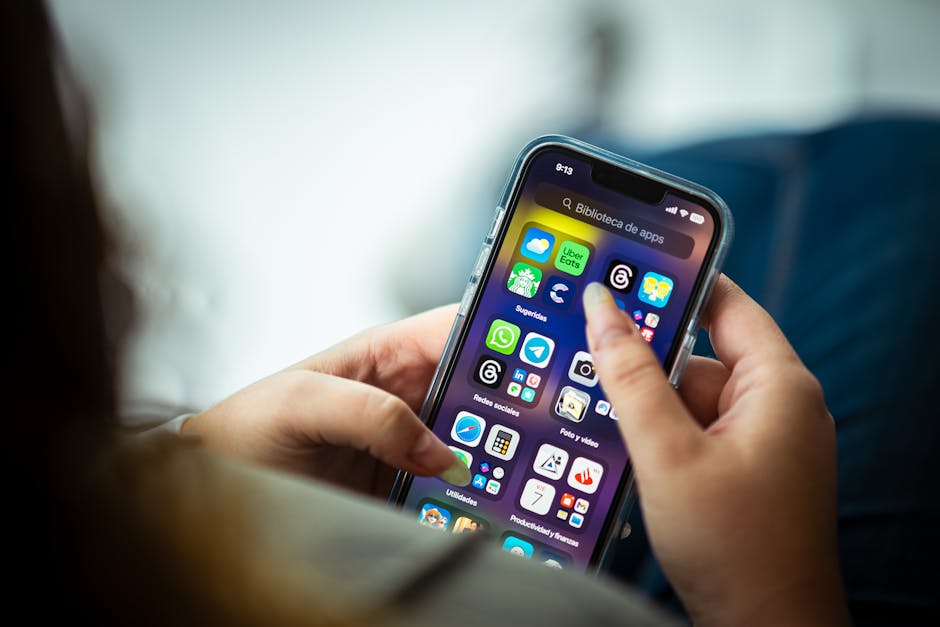 Photo by Julio Lopez via Pexels
Not all period-tracking apps work the same way. Some are purely calendar-based, doing the statistical averaging described above with no other input. Others integrate directly with wearable devices to incorporate temperature or heart-rate-variability data automatically, which tends to produce meaningfully more accurate predictions than calendar math alone, particularly for ovulation timing specifically. If accuracy for fertility purposes matters to you, it's worth checking whether an app you're considering incorporates any biological signal at all, rather than assuming all tracking apps function the same way under the hood.
What consistent logging actually trains the app to do
Each month of consistent logging gives a tracking app's algorithm a slightly better baseline for your specific cycle length, luteal phase duration, and typical variation range, rather than the generic population average it starts with. This is why predictions genuinely do tend to improve over the first three to six months of consistent use for many people, even without adding any biological signal — the app is learning your actual pattern rather than applying a one-size-fits-all assumption. Gaps in logging, skipping several months, reset much of this benefit, since the algorithm has less recent, consistent data to draw from.
Using tracking data productively beyond prediction
Even when predictions remain imperfect, the accumulated data itself has value beyond forecasting the next period. A multi-month log makes it much easier to notice genuine changes over time — a cycle that's been gradually lengthening, a luteal phase that's shortened, symptoms that have intensified — patterns that are difficult to notice month to month but become obvious across a longer view. Bringing this longer-term data to a doctor's appointment, rather than trying to describe it from memory, tends to lead to a more productive conversation about whatever prompted the visit in the first place.
Privacy considerations when choosing a tracking app
Period-tracking apps collect genuinely sensitive health data, and privacy practices vary considerably between providers — some store data locally on the device, others sync to cloud servers with varying data-sharing policies. Reviewing an app's privacy policy specifically for how cycle and fertility data is stored, whether it's shared with third parties, and whether it can be permanently deleted is a reasonable step before committing to months of detailed logging, particularly given how sensitive this category of health data can be depending on your individual circumstances and location.
Why prediction accuracy improves less for irregular cycles
Even with consistent logging and a biological signal added in, people with genuinely irregular cycles, whether from a diagnosed condition like PCOS, perimenopause, or another underlying cause, will generally see less predictive improvement than someone with an already fairly regular cycle. This isn't a flaw in the app or in your data — it reflects the fact that the app is trying to find a pattern in something that's inherently less patterned for physiological reasons. In this situation, shifting the goal from "accurate prediction" to "better awareness of my own actual patterns" tends to be a more realistic and ultimately more useful way to use a tracking app, one focused on genuine self-knowledge rather than a precision the underlying biology simply doesn't reliably support in every single case, regardless of which specific tracking app happens to be used in the end.
- Only about 13% of real cycles match the standard 28-day, day-14 ovulation assumption most apps default to.
- Apps without a biological input are estimating from your cycle history, not measuring what's happening this month.
- Log consistently for a few cycles, consider pairing with basal body temperature or cervical mucus tracking, and see a doctor if cycle length varies widely or periods stop for months.
Frequently asked questions
Are period tracking apps ever accurate?
They're a reasonable tool for noticing your own patterns over time, especially once they have several cycles of your real data, but they're predicting from averages, not measuring your body directly.
How many cycles of data do apps need to improve?
Most improve noticeably after three or more consistently logged cycles.
When should cycle irregularity be checked by a doctor?
If cycle length varies by more than seven to nine days month to month, or periods stop for more than three months outside of pregnancy, it's worth a conversation with a clinician.


