How to Tell If a 'Good Deal' Online Is Actually a Lower-Quality Version
Brands can change the fabric, lining and construction of a familiar item without changing its name. Here's how to spot it from the product page before you pay.
You see a sweater you already own, from the same brand, under the same name, at a price that feels like a win. A lower price on a familiar item is only a deal if it's still the same item — and the thing that most often changes quietly isn't the price tag, it's the spec sheet. Fiber blends get swapped, linings disappear, fabric gets thinner, and the product name stays exactly the same. The good news is that most of these changes leave traces you can check from your phone in a few minutes, before you pay.
Why the same name doesn't mean the same garment
Photo by MART PRODUCTION via Pexels
Brands reuse product names across seasons because the name carries goodwill: "the classic crew," "the signature trench." The garment behind that name can be re-sourced, re-cut or re-blended at any point, and nothing obliges the retailer to announce it. Some brands also produce separate lines specifically for their outlet or factory stores, rather than only sending leftover mainline stock there, so the outlet version of a familiar piece can be a different garment that happens to look similar in a product photo.
That means your memory of the item is not evidence about the item on the screen. The only useful question is: what does this listing say, right now, and how does it compare to what you know the original was?
Start with the fiber content line
The fiber content is the most honest sentence on any product page, because it's the one most likely to be legally required. Find it (often under "Details," "Materials" or "Composition") and compare it to the care label on the version you already own, or to an older listing.
The swaps worth catching:
- 100% cotton becoming a cotton-polyester blend. Not automatically worse, but it changes how the fabric breathes, pills and ages.
- Wool or cashmere sliding down the list. "Wool blend" can mean mostly acrylic or nylon with a little wool. The order and the percentages matter more than the word "wool" appearing at all.
- Linings changing or vanishing. A coat or blazer that used to list a viscose or cupro lining and now lists polyester, or no lining at all, will feel different to wear even if the outer fabric is unchanged.
- Leather becoming "vegan leather." That usually means polyurethane or PVC. It can be a reasonable product, but it's a different product at a different value.
If you no longer have the old item, the Wayback Machine (web.archive.org) often has archived copies of popular product pages. Paste the product URL in and look at a capture from a year or two ago. Seeing the old composition next to the new one settles the question faster than any review.
Check the fabric weight, or its stand-ins
 Photo by Atlantic Ambience via Pexels
Fiber content tells you what a fabric is made of. Fabric weight tells you how much of it there is. Some retailers list it, most often for T-shirts, denim, linen and sweatshirts, as grams per square meter (GSM) or ounces per square yard. One ounce per square yard is about 34 GSM, so you can convert if two listings use different units. You don't need to know what a "good" number is in the abstract; you only need to see whether the number went down between versions of the same item.
When weight isn't listed, look for its stand-ins:
- New adjectives in the description. "Lightweight," "airy" or "breezy" appearing on a piece that was never described that way is a hint that the fabric got thinner.
- Photos that show more than they used to. A model now wearing a camisole under a white shirt, or a darker backdrop behind a pale knit, can mean the fabric has become more see-through.
- The detailed specs shrinking. If a listing used to say "heavyweight," "brushed," "double-faced" or "fully lined" and that phrase is gone, assume the feature is gone too.
Treat a new country of manufacture as a reason to look closer
The country of manufacture changing is not, by itself, a quality signal. Excellent and poor garments come out of factories in every major producing country; what matters is the specific factory and the specification the brand pays for. Assuming one country means "cheap" and another means "quality" will mislead you in both directions.
What a change does tell you is that the item has been re-sourced. A move to a new factory is exactly the moment when a brand can also change the fabric, the pattern or the finishing without anyone noticing. So when the "Made in" line differs from your old label, don't judge it, but run every other check in this article more carefully.
- The fiber line and fabric weight are the two facts that best show whether a familiar item has been downgraded.
- Archived product pages let you compare old and new specs even if you no longer own the original.
- A new country of manufacture is a prompt to recheck everything else, not a verdict on its own.
Read the construction details that photos can still show
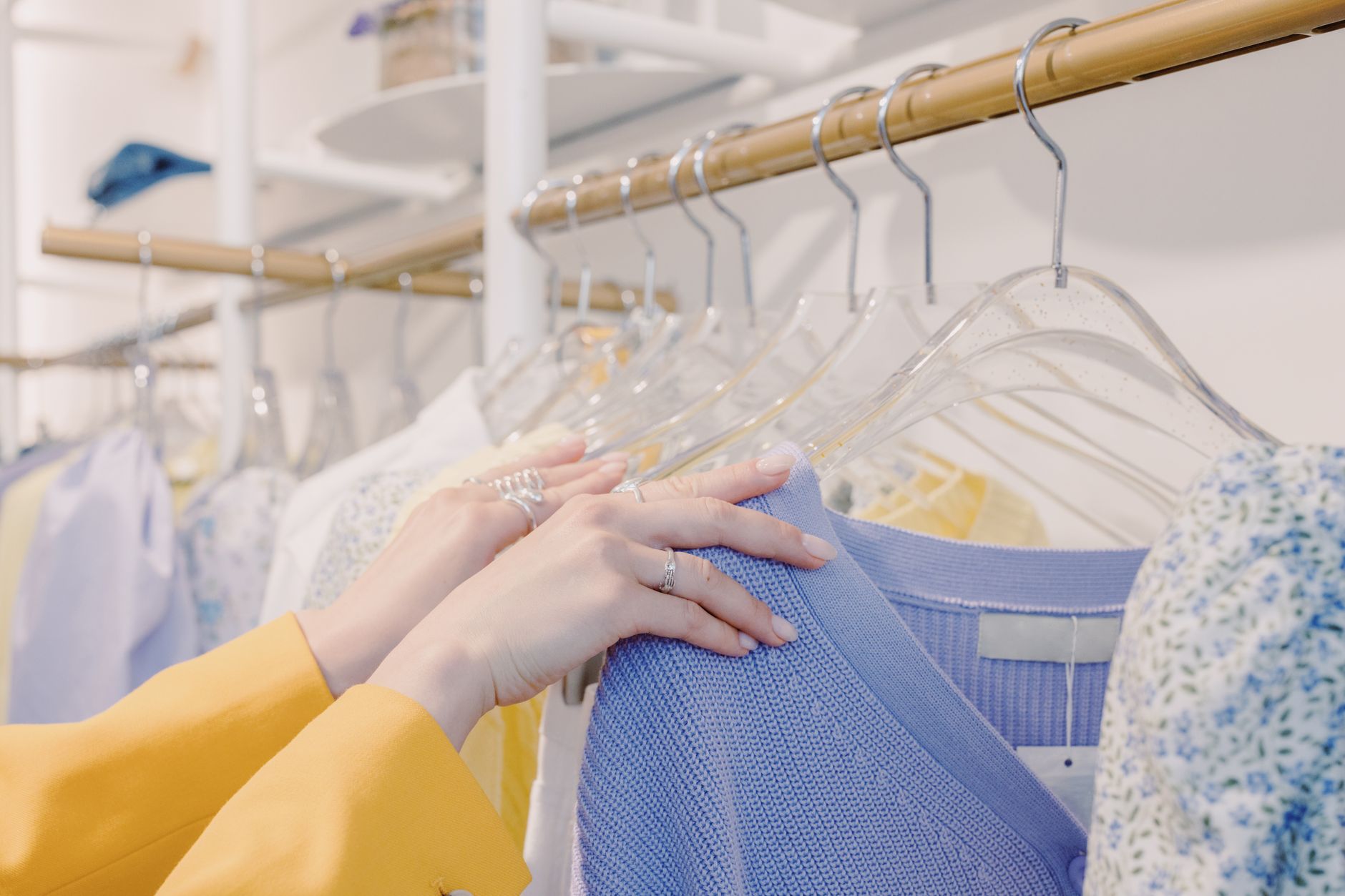 Photo by Ron Lach via Pexels
Zoom into every product image, and compare against your own piece or an archived listing. Cost-cutting tends to remove the things that take extra fabric or extra labor:
- Pockets that used to open and are now sewn shut or purely decorative.
- Fewer buttons, or buttons that changed from horn or metal to plastic.
- Stripes and plaids that no longer line up at the side seams or the center front.
- Hems and cuffs that look narrower, and knit ribbing that looks shorter or thinner.
- A collar or placket that used to have visible structure and now lies flat.
None of these alone proves a downgrade. Two or three together, on an item whose price dropped, is a pattern.
Use reviews to find comparisons, not ratings
The overall star rating is almost useless for this question. It averages years of reviews, and some marketplaces pool reviews across colors, versions or even different products under one listing. The older praise may be for a garment that no longer exists.
Instead, sort reviews by most recent and read the last few months. Then use the review search box, if there is one, for the words people use when something changed: "used to," "old ones," "thinner," "not the same," "changed," "different fabric," "runs smaller now." Comparative reviews like these are written by repeat buyers, who are exactly the people best placed to notice a downgrade. Reviews with photos of an old and new version side by side are the most valuable thing on the page.
Be fair about it, too. A single complaint is noise. Several recent reviews describing the same specific change, such as a thinner fabric or a shorter body, is a signal.
Don't let the crossed-out price do your thinking
 Photo by Karolina Ostrzolek via Pexels
A struck-through "original" price tells you what the retailer wants you to compare against. It doesn't tell you what most people actually paid, and it says nothing about whether this version is the one that used to sell at that price. A deal is a comparison between the price and what you're getting, and if what you're getting changed, the old price is no longer the right comparison.
A cleaner test: imagine the item came from a brand you've never heard of, with exactly the specs on this page. Would you pay this price for it? If yes, buy it and enjoy it. If you'd only pay it because of the brand name and your memory of the old version, it's not a deal.
The five-minute check before you buy
Run this quickly before you check out on any "same item, lower price" find:
- Compare the fiber content to your old label or an archived listing.
- Look for a listed fabric weight, or for new "lightweight" wording and changed photos.
- Note whether the country of manufacture changed, and if it did, be stricter on every other step.
- Zoom the photos for missing pockets, cheaper buttons, narrower hems and mismatched patterns.
- Search recent reviews for "used to," "thinner" and "not the same."
If two or more of these show a change, treat it as a different product and price it on its own merits. And if you buy it anyway, use the return window properly: keep the tags on, and set the new piece next to the old one. Hold both up to a window to compare how much light passes through, and if you have a kitchen scale, weigh the same size of each. A noticeably lighter garment in the same size and cut is using less fabric, and that's a fact you can act on before the return window closes.
Frequently asked questions
Is a cotton-polyester blend always lower quality than 100% cotton?
No. A blend can resist wrinkles and shrinkage better, and some garments are designed around one. The issue is an unannounced change: if a piece you liked was 100% cotton and is now a blend, it will breathe, pill and age differently, and the price should reflect what it is now.
How can I see what a product page used to say?
Paste the product URL into the Wayback Machine at web.archive.org and open a capture from a year or two earlier. Popular product pages are often archived, which lets you compare the old fiber content, description and photos with the current listing.
Are outlet store clothes the same as regular store clothes?
Not always. Some brands make separate lines specifically for their outlet or factory stores. Compare the fiber content, construction details and product codes with the mainline version rather than assuming they match.
What should I do if a new version arrives and feels worse?
Keep the tags on and compare it directly with your old piece: hold both up to a window to see how much light passes through, check pockets, buttons and hems, and weigh the same size of each on a kitchen scale if you can. If it's clearly thinner or simpler, return it within the window.