Why Matching Your Metals (Gold vs Silver) Matters Less Than You Think
The old rule judges the wrong thing. What makes mixed gold and silver look good is a consistent face zone, a clear lead metal and an accent that shows up more than once.
You've probably taken off a silver ring before leaving the house because the rest of what you had on was gold. The rule behind that habit is tidy, which is why it stuck around, but it judges the wrong thing. Whether your metals match matters far less than whether the mix looks deliberate, and the one place where consistency really shows is the zone around your face. Get that zone right, give the mix a clear lead metal, and gold and silver can share an outfit without looking like you got dressed in the dark.
Why the matching rule stopped being useful
Photo by Ihsan Adityawarman via Pexels
"Don't mix gold and silver" was easy to follow because it gave you a yes-or-no answer. The trouble is that it treats every mix as a mistake, when what actually looks off is a mix nobody seems to have planned. One stray silver hoop with an otherwise all-gold look reads as an accident. Three silver pieces and four gold pieces, spread out with some kind of logic, read as a choice.
There's a practical cost to the old rule, too. Most people own jewelry they didn't pick as a set: a gift necklace, a watch bought years ago, a ring that doesn't come off. If matching is mandatory, half of what you own can never be worn together. Dropping the rule doesn't mean anything goes. It means you swap "match everything" for a few checks that actually change how the result looks.
The zone that matters most: your face
Earrings, necklaces and glasses frames sit right where people look when they talk to you, so they're the pieces people actually notice. That's the area to keep consistent, and the area where choosing the right metal for you pays off.
Skip the vein test and the "warm people wear gold" charts. Do a daylight test instead. Stand near a window, hold a plain gold piece against your jaw, then a plain silver one, and look at your skin rather than the metal. One of them usually makes your face look a little more even and awake. The other may make it look slightly sallow or grey. If you honestly can't tell a difference, you're free to choose by taste.
Whichever metal wins becomes your face metal. Earrings and necklace in the same metal, or a bridge piece that contains it, keeps the most visible part of the outfit coherent. Everything below the collarbone gives you a lot more room.
Pick a lead metal, then repeat the accent
 Photo by Maryam via Pexels
A mix looks intentional when one metal is clearly in charge. Count the visible pieces you're wearing and make sure one metal covers most of them. Your face metal is usually the obvious lead.
Then follow the decision rule that does most of the work: an accent metal that shows up once looks like a mistake; one that shows up at least twice looks like a choice. If you're wearing mostly gold and want your silver ring, add a second silver note somewhere else, such as a silver bangle on the same arm or a watch with a steel case. The repetition tells people you meant it.
A bridge piece is the shortcut. That means anything that already combines both metals: a two-tone watch, a chain with mixed links, a ring that's half yellow and half white metal. Wear one and every other piece in either color suddenly has something to connect to. If you only buy one item to make mixing easier, make it a bridge piece in a style you'd wear daily.
- Keep earrings and necklace in the metal that passes your daylight test, or tie them together with a bridge piece.
- Let one metal cover most of what's visible, and repeat the accent metal at least twice.
- A single two-tone piece is the fastest way to make the rest of a mixed stack look planned.
Finish and scale matter more than color
Two pieces in the same metal can still clash if one is mirror-polished and the other is brushed, hammered or deliberately darkened. Mixed finishes often look busier than mixed colors, because polished metal tends to come across as dressy and matte or oxidized metal as casual. When you mix colors, try keeping the finish the same: all high-shine, or all soft and brushed. If you mix both color and finish at once, it gets harder to make it look intentional.
Scale works the same way. A chunky gold cuff next to a hair-thin silver chain bracelet looks like two different outfits sharing one arm. Pair pieces of similar weight, or build a clear gradient on purpose, such as a substantial watch, then a medium bangle, then a fine chain, so the size change reads as a design decision.
Condition counts as well. Sterling silver tarnishes, and plated pieces can wear through to the base metal at the edges. A dulled, darkening silver ring next to bright gold doesn't look mixed. It looks neglected. Clean or retire tired pieces before you pair them with something that shines.
Building around the pieces you can't change
 Photo by The Glorious Studio via Pexels
The real mixing problems usually come from things you wear every day and won't swap out.
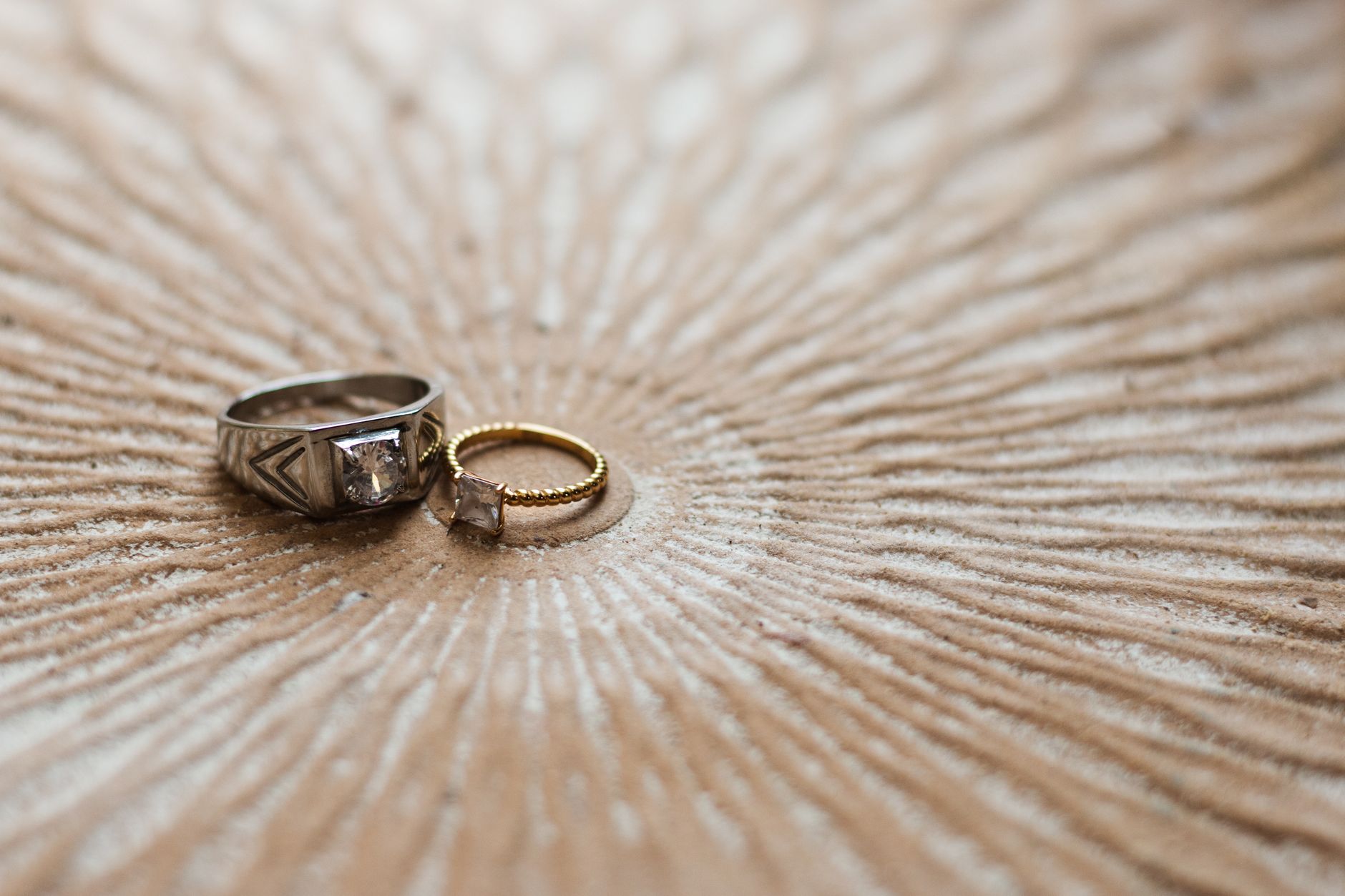
A ring that stays on. A white-metal engagement ring or wedding band is small and low on the body, so it rarely fights with gold elsewhere. If it bothers you, stack a thin band in your other metal on the same finger. That's the twice-repeated accent working at the smallest scale. Or move most of your gold to the other hand and wrist.
A watch. It's often the biggest piece of metal you wear, so treat it as an anchor. A steel watch with gold earrings works if a second silver-toned piece shows up nearby, like a ring on the same hand. A two-tone watch solves the question completely.
Glasses. Metal frames are face-zone jewelry. If they're silver-toned and your best metal is gold, either choose earrings that are small enough to defer to the frames, or let the frames set the face metal on days you wear them.
Hardware. Bag chains, belt buckles, zippers and coat buttons all count as visible metal. Keep them in mind when you count your pieces.
When matching is still the better call
Mixing isn't always the best answer. There are times when sticking to one metal looks cleaner, and it's worth knowing them.
- Very minimal looks. If you're wearing only two pieces, a mix has no room to repeat, so the accent will look like a one-off. Match them.
- Earrings and a pendant at the same height. When both sit right at the neckline in plain view, a mismatch between them is hard to read as deliberate unless one of them is a bridge piece.
- A single statement piece. A big collar necklace or sculptural cuff should be the only loud thing. Keep everything else in its metal or take it off.
- Formal events with matched sets. If you're wearing a set designed to go together, add-ons in another metal tend to look like an afterthought.
The two-minute mirror check before you leave
 Photo by MART PRODUCTION via Pexels
Stand at a full-length mirror with everything on, including your bag, glasses and coat, and go through this in order:
- Face zone. Are your earrings, necklace and any metal frames the same metal, or tied together by a bridge piece?
- Lead metal. Count the visible pieces. Is one metal clearly the majority?
- Accent repeat. Does the minority metal appear at least twice, or once inside a two-tone piece?
- Finish. Are the shiny and matte pieces fighting? Swap one if so.
- Scale. Does anything look much heavier or much finer than the pieces beside it?
- Condition. Is anything tarnished, scratched or worn through? Take it off.
If something fails, fix it with the smallest change you can make. Removing one piece usually beats adding three. Run the check a few times and it becomes automatic, and your jewelry box goes from two separate collections that can never meet to one you can actually wear together.
Frequently asked questions
Is it okay to wear gold and silver jewelry together?
Yes. A mix looks off when it seems accidental, not because the colors are different. Keep the pieces near your face consistent, let one metal cover most of what's visible, and repeat the other metal at least twice so it reads as a choice.
How do I know whether gold or silver suits me better?
Hold a plain gold piece and then a plain silver piece against your jaw in daylight, and look at your skin rather than the metal. Pick whichever one makes your face look more even. If you can't see a difference, choose by taste.
Can I wear a white gold or platinum ring with gold jewelry?
Usually without any problem, because a ring is small and sits far from your face. If it bothers you, stack a thin gold band next to it, or wear a two-tone piece such as a watch on the same side so the two metals are connected.
What is a bridge piece in mixed-metal jewelry?
Any piece that already combines both metals, like a two-tone watch, a chain with mixed links or a ring made of yellow and white metal. It gives every other gold or silver piece something to connect to, which makes the whole mix look intentional.