The Five-Piece Work Wardrobe That Doesn't Look Like a Uniform
Five pieces, counted honestly: how many outfits they really make, and the styling moves that keep a small work wardrobe from reading as the same look every day.
A small work wardrobe fails for one predictable reason: the pieces are too similar to each other. Five black or navy items with the same neckline and the same weight of fabric will look like a uniform no matter how well they fit. Five pieces only work when each one does a different job, in a different shape, so that swapping one changes the whole outfit. Choose them that way and five pieces cover a full working week without an exact repeat.
What counts as "five pieces"
The five are the clothes that carry the outfit: the parts someone notices from across a meeting room. Shoes, a coat, underlayers like a camisole, and accessories sit outside the count. That isn't cheating. Those items rarely define whether an outfit looks repeated, and pretending a capsule includes zero shoes just leads people to give up on it.
What the five should share is a color story, not a color. Pick one dark neutral (navy, charcoal, black, or deep olive) and one light one (ivory, white, pale gray, or soft blue). Every piece is either the dark, the light, or works with both. That single rule is what makes every combination below possible.
The five pieces
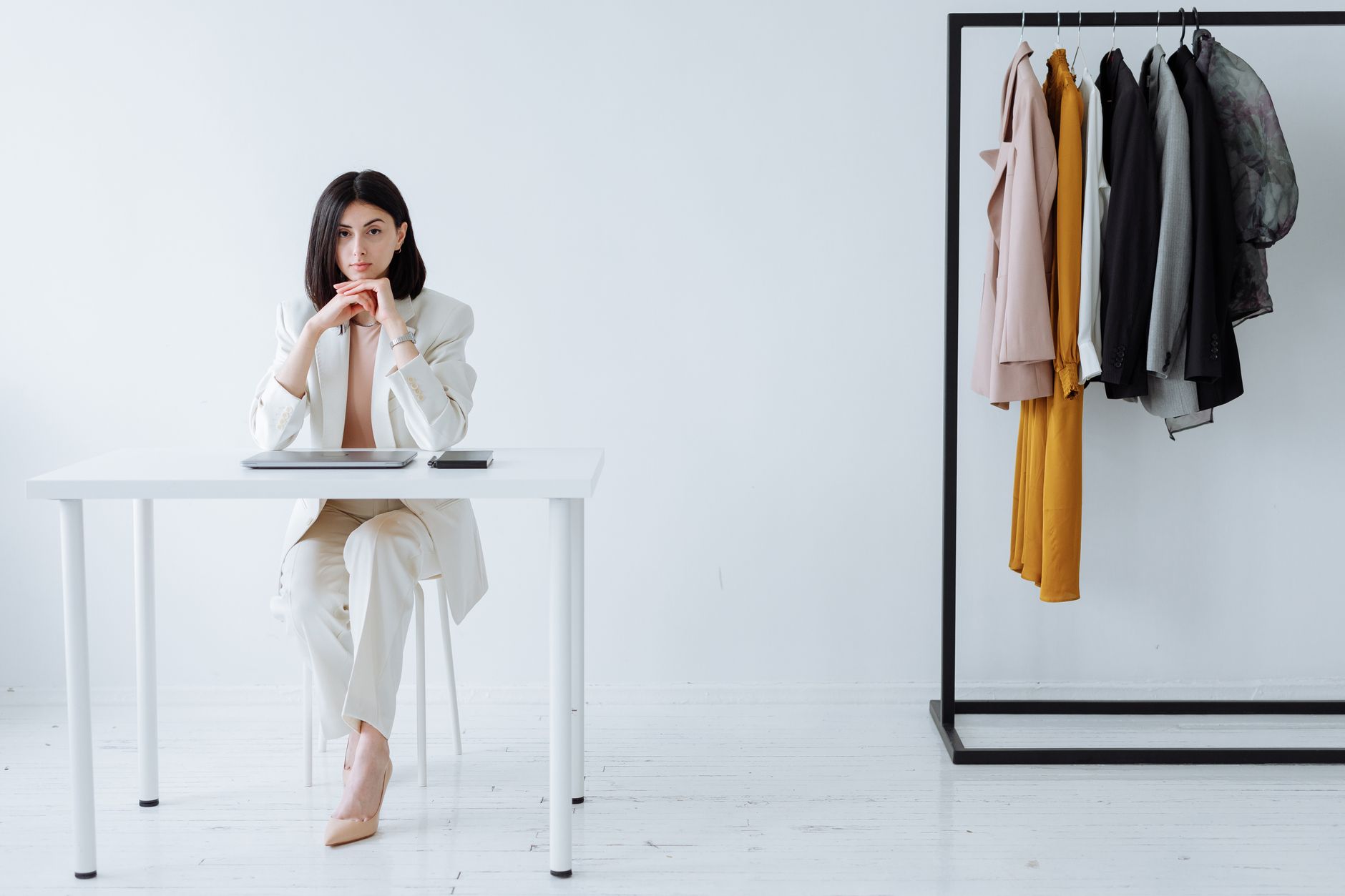
1. A structured blazer in the dark neutral. Single-breasted, hitting at or just below the hip, with shoulders that sit at the end of your own shoulder bone. This is the piece doing most of the "work clothes" signaling, so fit matters more here than anywhere else. A medium-weight fabric works across more of the year than a heavy wool.
2. Trousers in the dark neutral. Straight or wide leg, with a waist you can sit in comfortably for a full day. Matching the blazer exactly is optional; a close tone in a slightly different texture often looks more deliberate than a suit that only ever appears together.
3. A button-down shirt in the light neutral. Cotton poplin or a cotton blend, with a hem that looks intentional both tucked and untucked. It can be worn closed, open as a light layer, or under the blazer.
4. A fine-knit top. A thin crewneck or a high round neck, in the light neutral or a soft mid-tone. This is the piece that changes the neckline: where the shirt gives a collar and a vertical button line, the knit gives a clean, unbroken one.
5. A midi dress. A wrap or a simple shift in a fabric with some weight, such as ponte knit, so it holds its shape. Choose the dark neutral or a quiet print that contains it. The dress is the "one-step" outfit for mornings with no time, and it gives the blazer a second, completely different context.
 Photo by https://kaboompics.com/ via Pexels
How many outfits five pieces really make
Claims that five pieces make "endless" outfits don't survive counting. Here is the honest count of distinct base outfits, before shoes or accessories:
- Shirt and trousers
- Knit and trousers
- Shirt and trousers with the blazer
- Knit and trousers with the blazer
- Shirt worn open over the knit, with trousers
- The dress on its own
- The dress with the blazer
That's seven genuinely different looks, which already covers a five-day week with room to spare. Add a second pair of shoes, or the knit layered over the dress at the waist, and the variety grows further. Seven is not endless, but it doesn't need to be. Most people rotate far fewer outfits than that from a much fuller closet.
Why it won't look like a uniform
The uniform effect comes from repetition in three places: the same silhouette, the same neckline, and the same texture. The five pieces above are chosen so that each base outfit changes at least one of those.
Silhouette. Trousers and a top read as two blocks; the dress reads as one long line. Alternating between them is the biggest single change available, which is why the dress earns its place.
Neckline. The shirt's collar, the knit's round neck, the blazer's lapels, and the dress's wrap or scoop each put the visual focus somewhere different. Planning the week so the same neckline doesn't show up two days in a row is a simple trick that does more than adding a sixth piece would.
Texture. Crisp cotton, soft knit, structured blazer fabric, and a weighted dress knit each catch light differently. Even in a single color family, mixing textures keeps an outfit from looking flat.
- Pick five pieces that each do a different job, sharing one dark and one light neutral.
- Counted honestly, they make about seven distinct outfits: enough for a full week without repeats.
- Change silhouette, neckline, or texture from one day to the next and the uniform effect disappears.
Shoes and accessories do the rest
Because they sit outside the five, shoes and accessories are where personality goes. Two pairs of shoes cover most offices: one polished flat or loafer, and one slightly dressier option such as a low block heel. Swapping between them changes how formal the same trousers and shirt feel.
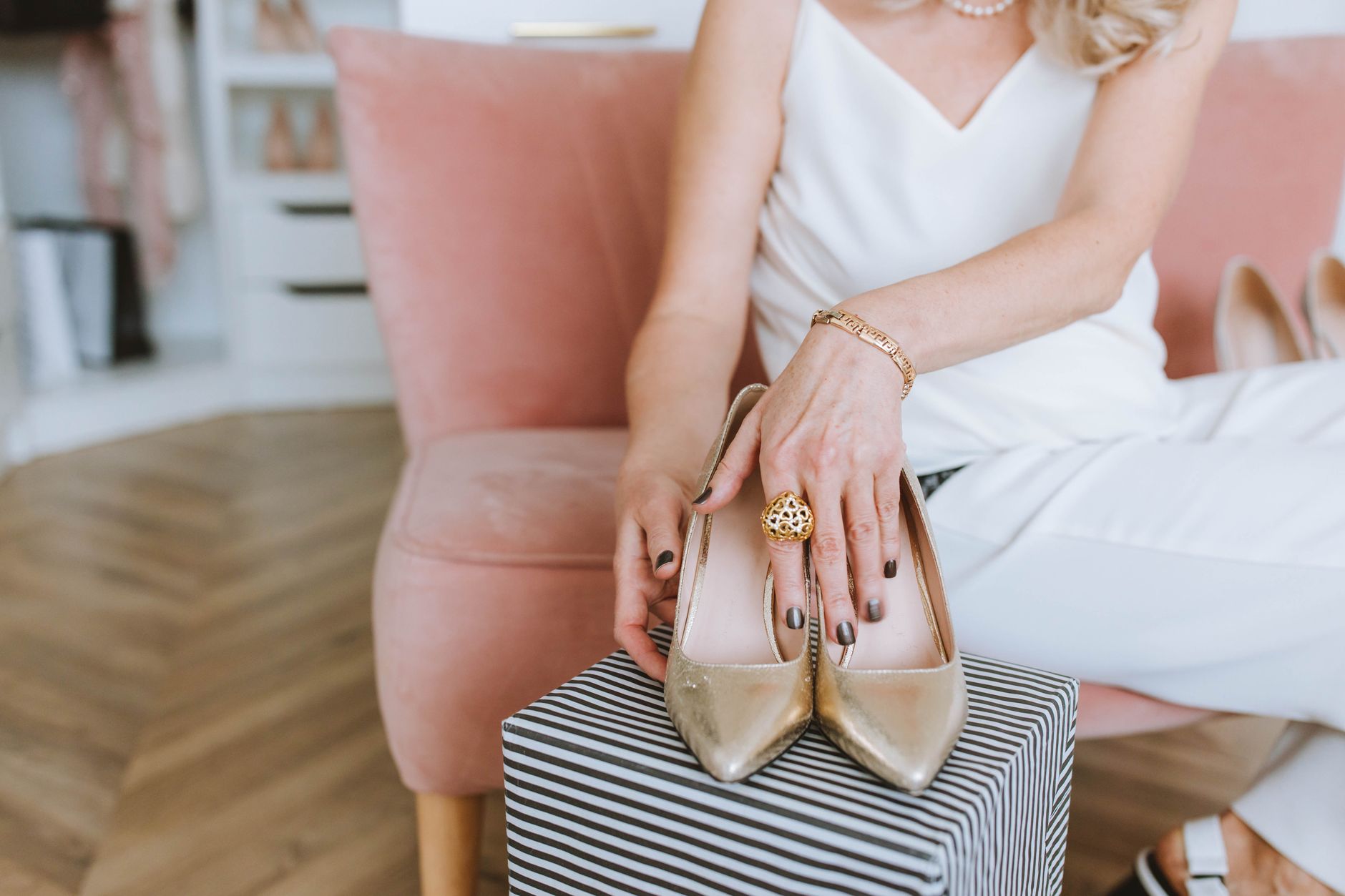 Photo by Anastasia Shuraeva via Pexels
A belt is the most useful single accessory in a small wardrobe. Worn over the knit and trousers, or over the dress, it changes the proportions of the outfit. Jewelry works best when it follows the neckline: a short pendant inside a round neck, a longer chain with an open collar, small earrings and nothing else when the dress is doing the work.
Choosing fabrics that last
With only five pieces in rotation, each one gets worn often, so durability matters more than it would in a large closet.
- Blazer: a wool blend or a good-quality structured synthetic blend holds its shape and resists wrinkling through a day of sitting. Avoid very thin fabrics that crease at the elbows.
- Trousers: look for some natural stretch and a fabric that recovers when you press and release it. That recovery is what keeps the knees from bagging.
- Shirt: cotton poplin or a cotton blend; a little stretch helps comfort, but very shiny fabrics tend to look tired sooner.
- Knit: fine-gauge knits pill less than fluffy ones. Turning them inside out to wash helps.
- Dress: ponte and other dense knits hold their shape and don't need ironing, which matters for the "no time" mornings the dress is meant for.
Adjusting the five for your workplace
The list assumes a typical business-casual office. Small swaps adapt it without breaking the system:
- More formal office: make the trousers match the blazer so they work as a suit, and keep the shirt in heavier rotation than the knit.
- More casual or creative office: swap the trousers for dark straight-leg jeans and wear the blazer less often, saving it for client days.
- Warm climate: choose a linen-blend blazer and lighter trousers; the dress becomes the workhorse.
- Cold climate: a fine merino knit keeps you warm under the blazer without bulk.
The structure stays the same: five pieces, two neutrals, each with a different job.
Keeping the capsule from creeping back to fifteen
Small wardrobes usually grow one "useful" purchase at a time. A simple rule keeps it in check: a new piece has to replace one of the five, not join them. When a shirt wears out, replace the shirt. When something new tempts you, ask which of the five it would retire. If the answer is none, it's a sixth piece, and that's the start of a uniform problem in reverse: too many similar options and nothing that works together.
Building it from what you already own
Before buying anything, pull out what you already have and sort it against the five roles. Most people already own two or three pieces that qualify: a blazer worn twice a year, trousers that fit well, a plain shirt. Fill the gaps one at a time, starting with whichever piece would unlock the most outfits. For most closets that's the blazer or the dress. Wear the set for two weeks before buying anything else, note which outfits you actually reach for, and let that decide the next purchase.
Frequently asked questions
How many outfits can five work pieces make?
About seven distinct base outfits if the pieces are a blazer, trousers, a shirt, a fine knit, and a midi dress. That covers a five-day week without an exact repeat, and a second pair of shoes or a belt adds more variety.
Do shoes count as part of a five-piece wardrobe?
No. The five are the clothes that define the outfit. Shoes, a coat, underlayers, and accessories sit outside the count and are where you add variety and personality.
How do I keep a small work wardrobe from looking like a uniform?
Change the silhouette, the neckline, or the texture from one day to the next. Alternating between trousers and a dress, and between a collared shirt and a round-neck knit, does more than adding another similar piece.
Which piece should I buy first?
Start with whatever you already own, sorted against the five roles, then buy the piece that unlocks the most outfits. For most people that's a well-fitting blazer or a midi dress.