Why Your Budget Falls Apart by the Third Week of the Month
A monthly budget tells you how much you can spend, not how fast. Pacing the flexible part weekly fixes the mid-month crash.
Most budgets that collapse in the third week were never too tight to begin with. The usual problem is timing: the bills, the big grocery run and the "I just got paid" spending all land in the first ten days, and the flexible money that was supposed to last a month is gone before the month is half over. A single monthly number can't show you that, because it only tells you how much you can spend, not how fast. The fix is to keep your monthly budget but pace the flexible part of it one week at a time.
The problem isn't your total, it's your timing
Photo by Nataliya Vaitkevich via Pexels
The standard way to build a budget, the one the Federal Trade Commission lays out on consumer.gov, is to list your bills and expenses, add up your monthly income and subtract one from the other. That's the right starting point, and it answers whether the month works on paper. It doesn't answer when the money leaves.
A budget can balance perfectly over 30 days and still leave you with an empty account on day 21. If your income arrives on one schedule and your spending follows another, you get a gap in the middle of the month even when the totals match. That gap is what feels like "the budget fell apart."
Three ways a month gets front-loaded
Look at your last two bank statements and check for these three patterns. You may find one, or all three.
Payday spending. Check whether takeout, small online orders and "while I'm here" purchases cluster in the few days after money lands. A full balance makes each one look harmless, and none of them feels like overspending at the time.
The month-start restock. A big grocery and household shop right after payday is efficient, but it often isn't counted as part of the month's food money. Then the regular weekly shopping continues on top of it, and the grocery line is spent twice.
Bills that bunch up. If rent, the phone bill, insurance and a card payment all fall due in the same week, the flexible money that's left has to stretch across a long stretch with no new income behind it. And the non-monthly costs, an annual subscription, a car registration, a school fee, tend to land without warning and get paid out of whatever happens to be in the account.
Map the month before you try to fix it
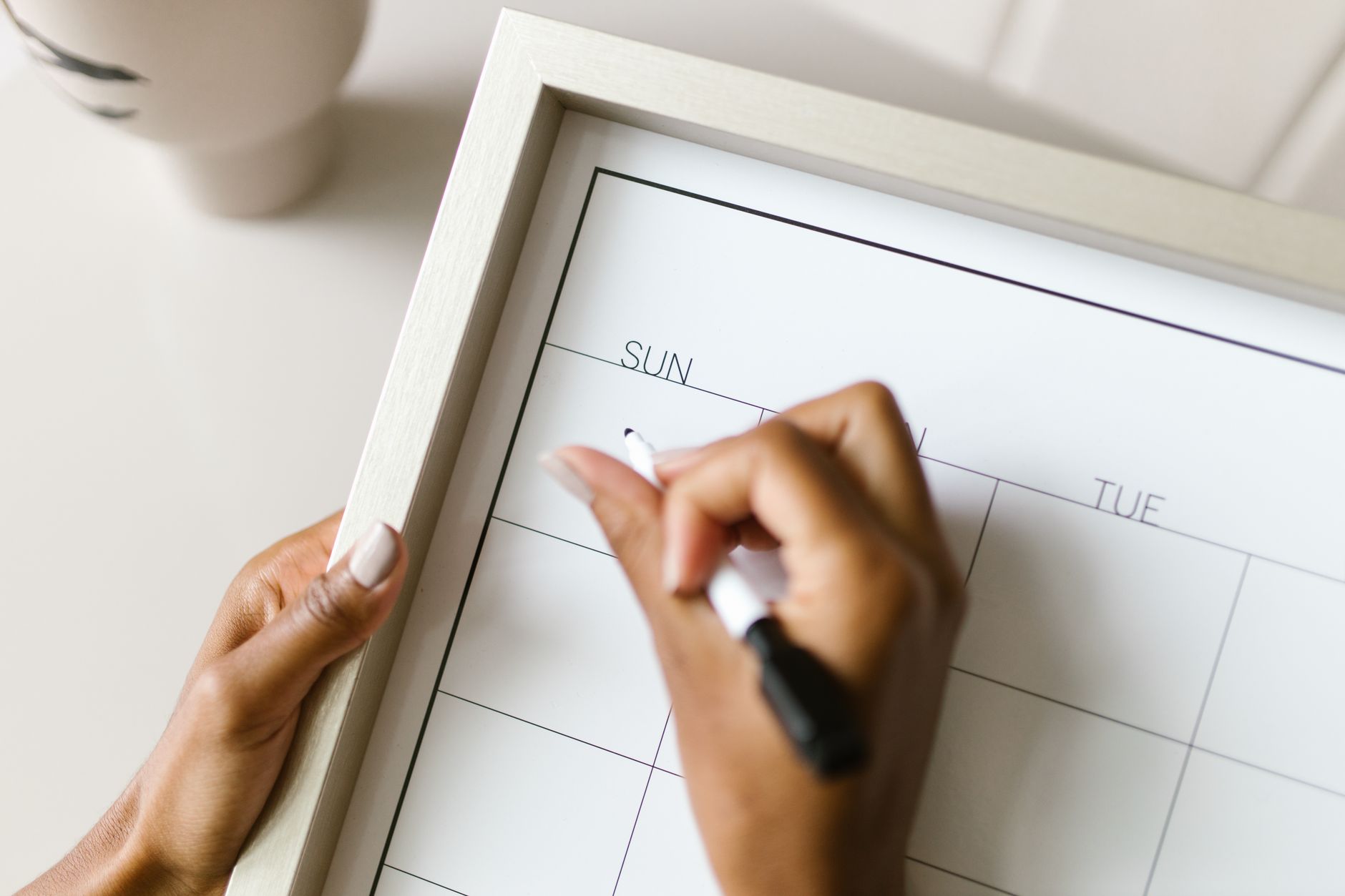 Photo by RDNE Stock project via Pexels
The Consumer Financial Protection Bureau has a simple worksheet for this, called "Adjusting your cash flow." You write each income on the calendar on the day you receive it, with a plus sign, and each expense on the day you pay it, with a minus sign. Then you look for the places where you're coming up short.
Do this once for next month, in pencil, before changing anything else. Look for the longest stretch between one income and the next, and which bills fall inside it. Then find the week where the running balance gets lowest. That's your real problem week, and it may turn out to be the second week, with the third simply where you notice it.
This map tells you whether you have a spending-pace problem, a bill-timing problem, or both. The fixes are different, so it's worth knowing which one you're dealing with.
Split your flexible money into weekly allowances
Divide your budget into two kinds of money. Fixed money covers bills with a set amount and a due date: rent, utilities, loan payments, insurance, subscriptions. Flexible money is everything you decide in the moment: groceries, fuel, eating out, household items, personal spending.
Fixed money stays monthly. Flexible money gets paced weekly. This matches a tip from the CFPB's "Consumer tips for managing spending": set a weekly spending limit based on your budget, and consider setting that money aside at the start of the week and not spending more than you set aside.
To get the weekly number without the four-or-five-weeks problem, use this:
Weekly allowance = monthly flexible budget × 12 ÷ 52
If your flexible budget is $800 a month, that's $9,600 a year, or about $184 a week. Using 52 weeks instead of "four weeks a month" matters: four weeks of $200 would use up the $800 by day 28 and leave the last few days of every longer month with nothing.
Then pick a reset day, the same day every week, when the next allowance becomes available. If you're paid weekly or every two weeks, the day after payday works well. Move the allowance somewhere it can't mix with bill money: a separate checking account, a prepaid card or cash, if cash suits how you shop.
- A balanced monthly budget can still run dry mid-month if bills and big purchases cluster in the first week or two.
- Keep fixed bills monthly and pace only the flexible money, using monthly flexible × 12 ÷ 52 as the weekly amount.
- Map next month's income and bills on a calendar first, so you know whether the problem is spending pace, bill timing or both.
What belongs in the weekly allowance, and what doesn't
The weekly allowance only works if it covers everything you decide on the spot. If groceries live in the allowance but takeout comes out of "somewhere else," the leak just moves.
Put in the allowance: groceries and household supplies, fuel or transit top-ups, eating out and coffee, personal care purchases, small gifts, kids' incidental costs, and anything you'd describe as "just a few things."
Keep out of the allowance: fixed bills, savings transfers, debt payments, and anything that happens less than monthly.
If you like a big stock-up shop at the start of the month, keep it, but budget it as a separate line and shrink the weekly grocery share to match. Otherwise the restock eats into week one's allowance and you start the month already behind.
The rules that keep weekly pacing from breaking
 Photo by Towfiqu barbhuiya via Pexels
Any weekly system needs a few decisions made in advance, because the moment you need them is the worst time to make them.
When you overspend, next week pays for it, not the bills. If you go $30 over this week, next week's allowance is $30 smaller. Never pull the shortfall from rent or utility money. The CFPB's spending worksheet lists "When I overspend I often think I can spend less later to make up for it, but I find it's hard to do" as one of its common spending challenges. A fixed rule turns "later" into a specific number on a specific day.
When you underspend, decide where it goes before it happens. The simplest rule: leftovers roll into next week until the month ends, then the remainder moves to savings or to your non-monthly expense fund. That keeps a good week from turning into a reason to splurge on Friday.
Check the balance before you shop. The CFPB suggests checking your balances before you go shopping and signing up for balance alerts from your bank or credit union. With a weekly allowance, the number you check is small and meaningful: "$62 left until Tuesday" is a clearer signal than a full account balance.
Don't let a card bypass the system. A credit card used for allowance spending needs to be tracked against the allowance the same day, or the week will look fine while the real spending piles up on the statement.
Move the bills, not just the spending
If your calendar map showed bills clustering in one week, pacing your flexible money will help but won't fully solve it. The CFPB's cash flow worksheet suggests two direct fixes: call your creditors to ask about changing due dates, and split large periodic bills into smaller, more frequent payments where that's possible.
When you call, be specific about what you want:
"I get paid on the 1st and the 15th. Is it possible to move my due date to the 18th so the payment lines up with my paycheck?"
Not every company will agree, but asking costs nothing. Shifting even one large bill to the second half of the month can flatten the dip in your calendar map.
For the costs that don't come every month, use the CFPB's annual planner approach: list the bills you pay annually, twice a year or quarterly, plus seasonal costs like holidays and back-to-school shopping, and note when each one is due. Add up the yearly total, divide by 12 and set that amount aside each month as part of your fixed money. When the car registration arrives, it's already covered and doesn't wipe out a week's allowance.
Your first month on weekly pacing
 Photo by cottonbro studio via Pexels
Set it up in one sitting, ideally a few days before your next payday:
- Map next month on a calendar: income on the day it arrives, bills on the day they're due.
- Split your budget into fixed and flexible money, and add a monthly amount for non-monthly costs to the fixed side.
- Calculate the weekly allowance: monthly flexible × 12 ÷ 52.
- Choose a reset day and a separate place for the allowance to live.
- Write down your overspend and underspend rules so they're decided before the first bad week.
- Call about any bill that falls in your lowest week.
Expect the first month to be uneven. The FTC's guidance is to plan your spending at the start of the month, write down what you spend each day, and at the end of the month see whether you spent what you planned, then use that to plan the next month. The CFPB adds that if your spending is regularly out of line with the budget, adjust the budget. If you overspend the allowance most weeks, the allowance is probably unrealistic, not you. Move money from another line, or cut a fixed cost, rather than repeating a number that keeps failing.
By the end of the second month you'll know whether week three still runs dry. If it does, go back to the calendar: the answer is usually a bill that still needs to move or a non-monthly cost you didn't list.
Frequently asked questions
Why do I always run out of money before the end of the month?
Usually because spending is front-loaded: bills, a big restock and post-payday purchases land in the first week or two, so flexible money is gone before the month ends even when the monthly totals balance. Mapping income and bills on a calendar shows where the gap is.
How do I turn a monthly budget into a weekly one?
Keep fixed bills monthly and pace only flexible spending. Multiply your monthly flexible budget by 12 and divide by 52 to get a weekly allowance that works whether a month has four or five weeks.
What should I do if I overspend my weekly allowance?
Take the overage out of next week's allowance, never out of bill money. Deciding this rule in advance stops a single bad week from spilling into rent or utilities.
Can I change the due date of a bill to match my payday?
Often you can ask. The CFPB suggests calling creditors about changing due dates so bills line up better with when you're paid. Not every company will agree, but asking costs nothing.